2026-10-08 · Ryan Thompson
Preparing Your AC For Wildfire Smoke Season
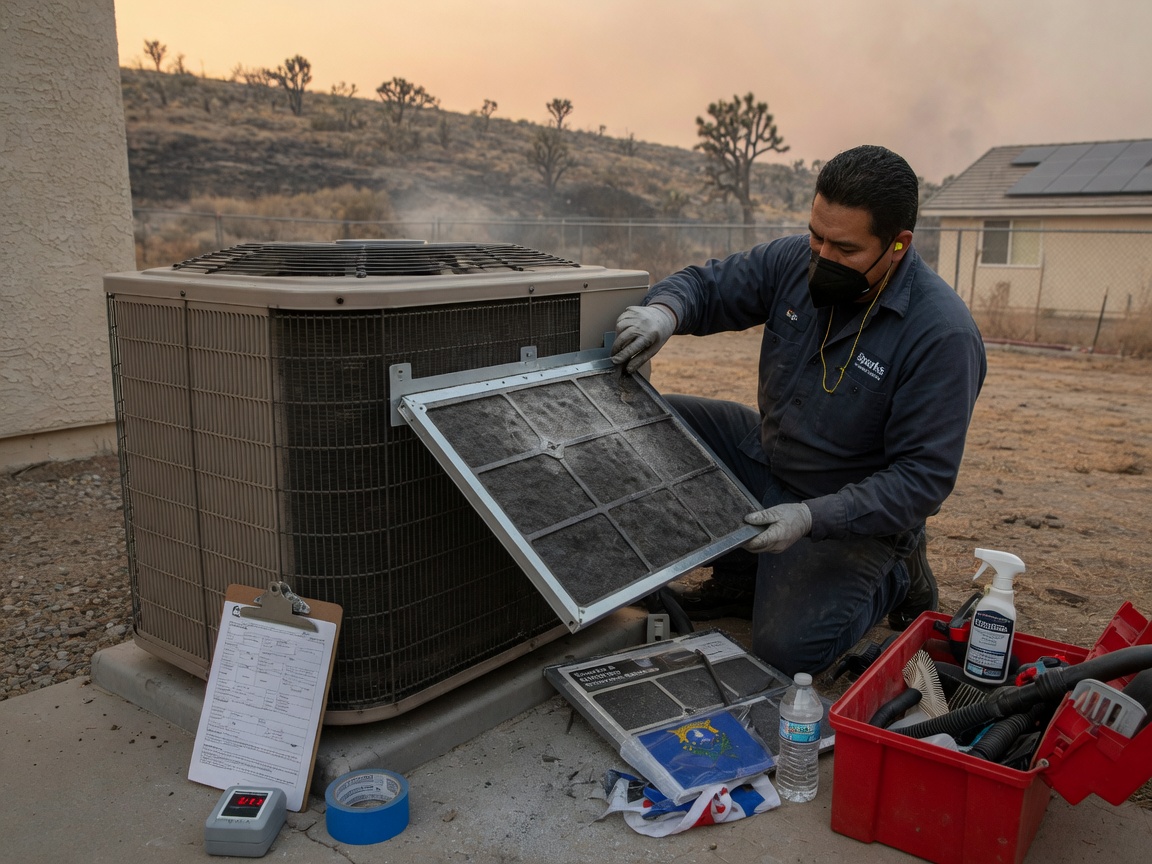
To prepare your AC for wildfire smoke season in Sparks, inspect and replace filters every 30 days during peak periods, seal visible duct leaks, and add higher-efficiency filtration where your system allows. These steps limit smoke particle entry in a region where hot summers draw in outside air and cold winters keep systems running longer. Homes in Spanish Springs and Wingfield Springs often face combined desert dust and smoke loads that shorten filter life.
Assessing Filter Condition Before Smoke Arrives
Check your current filter at the start of summer. In the high desert climate around Sparks, filters load faster from dust alone, and smoke adds fine particles that pass through standard 1-inch filters. Replace any filter showing gray or brown discoloration rather than waiting for the full 90-day mark. Note the MERV rating on the old filter and consider moving to MERV-13 if your blower can handle the added resistance. Homeowners near the Sparks Marina report quicker filter changes when prevailing winds carry smoke from regional fires.
Sealing Ducts and Return Vents
Examine accessible ducts in attics and crawl spaces for gaps. Smoke infiltrates through the same paths as desert dust, especially in older housing stock common in D'Andrea. Use mastic sealant or metal tape on joints rather than standard duct tape, which fails in temperature swings between daytime heat and nighttime cooling. Cover return vents with magnetic vent covers during heavy smoke days to reduce intake. This approach pairs well with regular AC Maintenance that includes a full duct inspection.
Upgrading to Better Filtration Media
Install a filter rack that accepts 4-inch or 5-inch media if your current setup uses thin filters. These deeper filters capture more smoke particulate without restricting airflow as severely. Pair the upgrade with HVAC Duct Cleaning to remove built-up dust that otherwise mixes with incoming smoke. In Washoe County, where summer highs often exceed 90 degrees, the AC runs continuously and pulls more outside air, making deeper filtration essential. Test airflow after any change to avoid freezing the coil.
Adding Whole-Home Air Cleaning
Consider an Air Purifier & UV Filter Installation downstream of the evaporator coil. UV lights reduce microbial growth on wet coils while the purifier handles smoke odors that standard filters miss. This combination proves useful in areas like Wingfield Springs where wind patterns can trap smoke for days. Run the system fan continuously on low during smoke events to circulate air through the new filtration without overcooling the house.
Scheduling Pre-Season Service
Book a full system check before July when wildfire risk rises. Technicians can measure static pressure, verify refrigerant levels, and confirm the blower motor handles upgraded filters. Link this visit to the insights in Common AC Issues From Desert Dust In Sparks Nevada to address both dust and smoke together. Residents in nearby Reno and Sun Valley face the same seasonal pattern, so early appointments fill quickly.
Monitoring Performance During Smoke Events
Watch indoor humidity and temperature closely once smoke arrives. Elevated static pressure readings on a manometer indicate a loaded filter that needs immediate replacement. Keep windows closed and rely on the AC to recirculate rather than introduce outside air. If odors persist after filter changes, schedule Indoor Air Quality Testing to identify remaining sources inside the ductwork. These habits keep systems running reliably through the high desert smoke season without unnecessary strain.